
Our Philosophy | Regenerative Winegrowing
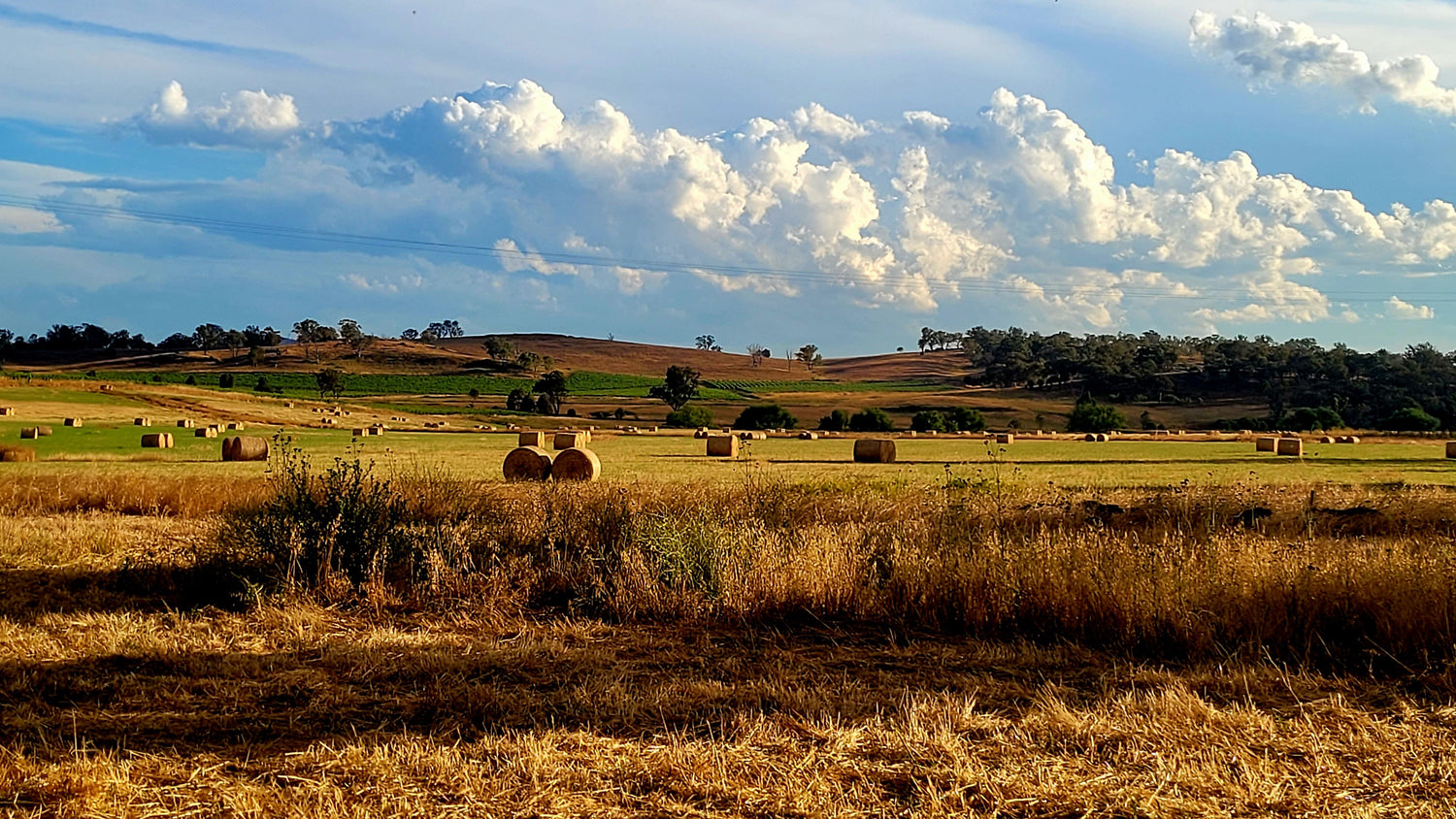
GREAT WINE STARTS IN THE VINEYARD
We believe great wine is grown, not manufactured.
Our job is not to impose a style upon the vineyard, but to understand this place, care for it, and capture what it gives us.
At De Beaurepaire, that begins with an unusually cool, continental vineyard on ancient limestone soils at Rylstone. It continues through the way we farm, the decisions we make each season, and ultimately the restraint we exercise in the winery.
The more faithfully we care for the vineyard, the less we need to interfere with the wine.
Farm with nature, not against it
We see ourselves as custodians of this land.
Regenerative farming is therefore not a certification exercise or a marketing claim. It is our attempt to leave the vineyard healthier, more resilient and more alive than we found it.
We do not till our vineyard soils. We encourage diverse mid-row plantings and insect life, graze livestock through the vineyard, mow beneath the vines rather than relying on herbicides, and increasingly use beneficial microorganisms and biological approaches to suppress disease.
The objective is simple: build a functioning ecosystem rather than continually compensate for a broken one.
That means healthier soils, healthier vines, greater biodiversity and progressively less dependence on intervention.
Understand more. Intervene less.
Tradition matters to us. So does curiosity.
Burgundy had centuries to understand the relationship between individual sites, soils, seasons and vines. We don't.
So we measure.
We experiment with soil biology, vine nutrition, weather, phenology and vineyard variability. We use modern technology where it helps us understand the land more clearly — not to industrialise farming, but to make better and increasingly precise decisions.
Sometimes the most advanced technology tells us to do less.
That is the point.
Capture the place
The same philosophy follows the fruit into the winery.
Our wines are French-inspired, but they are not intended to imitate France. They are wines of Rylstone.
We use traditional and contemporary techniques according to the fruit and the season, with one guiding principle: protect the character created in the vineyard rather than manufacture it in the winery.
The result we seek is elegance rather than excess; freshness rather than weight; complexity without heaviness; and wines capable of developing beautifully with time.
For the next generation
De Beaurepaire is a family estate.
Everything we do is therefore viewed over generations rather than vintages.
We want our children to inherit healthier soil, stronger vines, greater biodiversity and a deeper understanding of this remarkable piece of land than we inherited ourselves.
Because sustainability is ultimately not about maintaining what exists.
It is about leaving something better behind.
Our philosophy in practice
These principles shape the way we farm every day. Here is what they mean in practice.
Building living soils
We do not till our vineyard soils, helping to protect soil structure, retain moisture, maintain active root systems and
help retain soil carbon.
Our midrows are planted with diverse blends of grasses and legumes selected to build organic matter, improve soil structure and support biodiversity.
Beneath the vines, we mow rather than relying on herbicides for weed control, improving airflow around the vines. Through winter, our cattle graze the midrows, naturally keeping growth in check before spring.
We also convert vineyard prunings into biochar, returning carbon and organic material to the land rather than treating them as waste.
Working with biology
Wherever possible, we are replacing conventional chemical interventions with biological ones.
We use beneficial microorganisms and biological sprays to help suppress vineyard disease, including cultures we propagate ourselves and apply to the soil.
Beneficial microorganisms can also be applied precisely by drone, allowing us to target parts of the vineyard where intervention is needed.
The objective is simple: build a functioning ecosystem rather than continually compensate for imbalance.
Encouraging biodiversity
We actively encourage beneficial insects and natural predators throughout the vineyard.
Dedicated insectariums provide habitat for species such as lacewings and ladybirds, while predatory wasps help control vineyard pests including borers.
The greater the biological diversity of the vineyard, the less reliant we become on broad-spectrum intervention.
Lower-intervention winemaking
That philosophy continues into the winery.
During vintage we use selected non-Saccharomyces yeasts where appropriate to help protect freshly harvested fruit and reduce our reliance on sulphur during harvest and early winemaking.
As in the vineyard, the objective is not intervention for its own sake, but to use our understanding of biology to intervene more intelligently — and ultimately less.
Reducing waste
We reuse packaging and other materials wherever practical and continually look for ways to reduce waste throughout the vineyard, winery and distribution process.
Even our approach to bird control reflects this thinking. We use a non-lethal laser deterrent system rather than conventional physical or harmful deterrents, while resident species such as magpies quickly learn to coexist with it.
None of these practices exists in isolation. Together, they are part of a broader objective: healthier soils, healthier vines, greater biodiversity and better wine — with progressively less intervention.
